
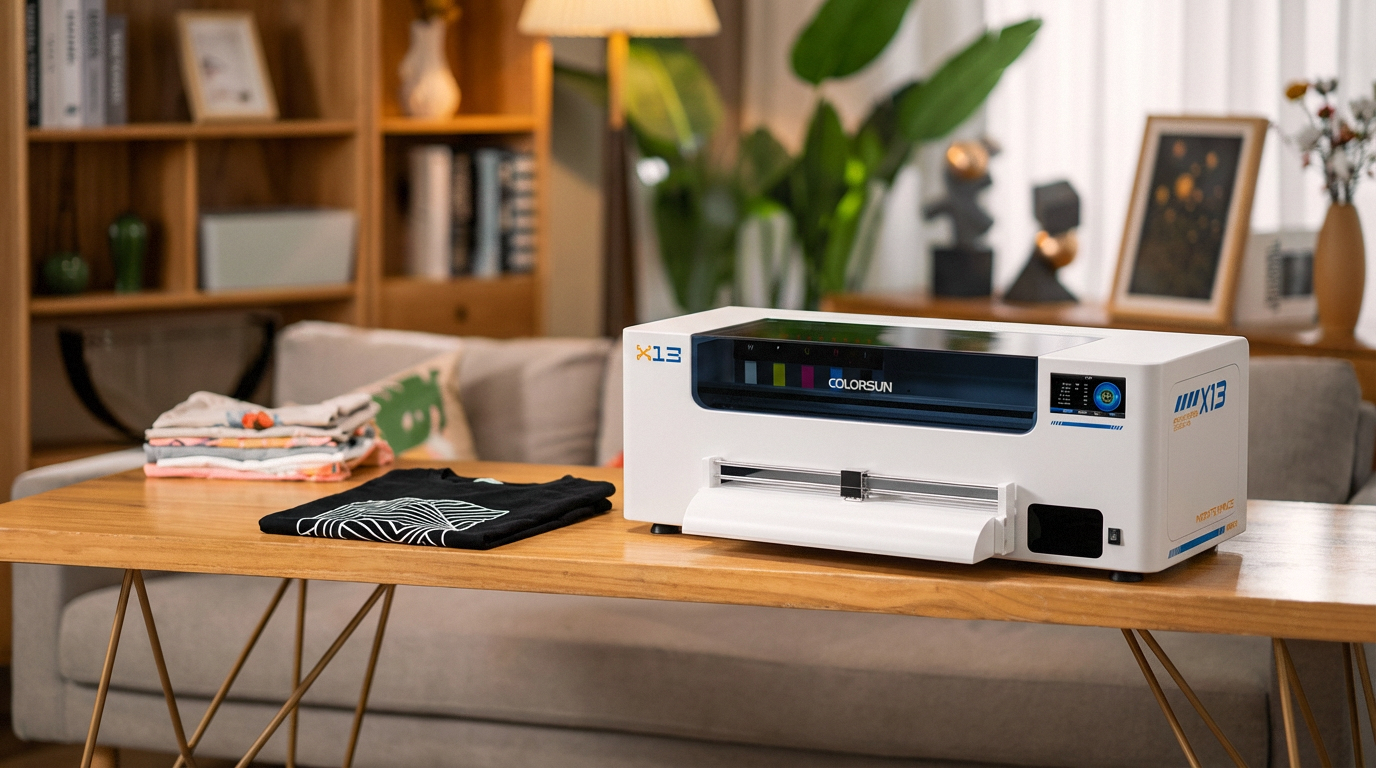
Direct-to-Film (DTF) printing has democratized custom apparel, leading many to ask: “Can I run this out of my house?” While the prospect of printing high-quality, full-color transfers in your pajamas is enticing, the transition from a commercial shop to a home environment involves more than just finding an empty desk.
Based on recent discussions among home-based printers, here is what you need to know before bringing a DTF setup into your living space.
1. The Space and Power Challenge
Most people underestimate the footprint of a "small" DTF setup. To run a home business effectively, you need space for:
- The Printer: Even a desktop A3 printer needs a level, sturdy surface.
- The Curing Station: A manual oven or a small powder shaker.
- The Heat Press: This is usually the bulkiest item and requires a dedicated high-voltage circuit.
- Supplies: Rolls of film and bottles of ink need to be stored in a climate-controlled environment to prevent moisture contamination.
The Power Factor: Running a heat press and a curing oven simultaneously on the same household circuit often trips breakers. You may need to ensure your "home office" can handle the electrical load.
2. The Critical Issue: Ventilation and Health
The most significant hurdle for home users is the curing process. When DTF powder (TPU) melts, it releases fumes that are not safe to breathe in a confined residential space.
- The Solution: You cannot simply open a window. You need a dedicated air extractor with a HEPA and charcoal filter, or a vacuum-sealed venting system that leads directly outside.
- The Risk: Without proper filtration, a thin layer of "glue dust" and oily residue can settle on your furniture and electronics.
3. The "High-Maintenance Pet" Syndrome
A DTF printer is not like a standard paper printer that you can leave off for a month.
- Daily Nozzle Checks: If you skip a few days, the white ink (which contains heavy pigments) will settle and clog your printhead.
- Humidity Control: Most home environments are too dry or too humid. You will likely need a dedicated humidifier to keep the room between 40% and 60% humidity to prevent the ink from drying inside the heads.
4. The "Buy vs. Build" Dilemma
For home users, the biggest question is whether to buy a printer or just buy transfers.
- Ordering Transfers: Cost roughly $3/ft + Shipping Fee. Zero maintenance, zero fumes, zero equipment cost. But the price is higher
- Owning a printer: requires a high upfront investment (over $2,000 for equipment), with additional costs of roughly $0.60 per transfer sheet.
- The Verdict: If you are printing fewer than 20 shirts a week, most home users on Reddit suggest it is cheaper and less stressful to outsource the printing and only own a heat press.
Conclusion
Bringing DTF into your home is entirely possible and can be highly profitable, but it requires a "shop-first" mindset. If you can manage the ventilation, commit to daily maintenance, and handle the electrical requirements, a home DTF setup offers a level of creative freedom that is hard to beat.
Reference:
Modified from discussions and user experiences in the Reddit community:
DTF printer at home - Reddit r/heatpress
FAQs for Home-Based DTF Printing
Q1: Can I use a regular Epson printer from the store for DTF?
A: Technically, yes, but it is difficult. You would need to convert it by adding specialized RIP software and changing the ink system. Most home users now recommend buying "pre-converted" printers that are designed to handle white ink, as DIY conversions often leak or clog within the first month.
Q2: Does the "melting powder" smell?
A: Yes, it does. The powder emits a noticeable sweet, chemical-like odor when heated, caused by the release of volatile organic compounds (VOCs). While DTF printing is generally more environmentally friendly than traditional methods like screen printing, it still produces VOCs. Even if the smell doesn't seem strong at first, daily exposure in an unventilated space can lead to respiratory irritation. It is strongly recommended to always work in a well-ventilated area, ideally with an exhaust fan, and to use an air purifier with an activated carbon filter to minimize inhalation risks.
Q3: How much money can I make with an A3 home setup?
A: If you charge $20 to $25 per shirt and your total cost (including shirt, film, and ink) is $7, you make a profit of $13 to $18 per shirt. By printing and pressing just 5 shirts per hour, you can net a gross profit of $65 to $90 per hour.
Q4: Is it noisy?
A: The printer is relatively quiet, but the automatic powder shaker and the air extractor can be quite loud—similar to a loud vacuum cleaner. If you live in an apartment, your neighbors might hear the vibration of the equipment.
Q5: What is the best room in a house for a DTF printer?
A: A garage or a basement is usually best because they are easier to vent and have cooler, more stable floors. Avoid carpeted rooms, as the adhesive powder is very fine and will get trapped in the carpet fibers, making it impossible to clean.
Q6: What is the "White Ink Circulation" feature, and do I need it?
A: Yes, especially for home users. Since you might not be printing 24/7, a circulation system keeps the white ink moving so it doesn't turn into "clumped glue" in your lines. It is a must-have for any home-based setup in 2025.