
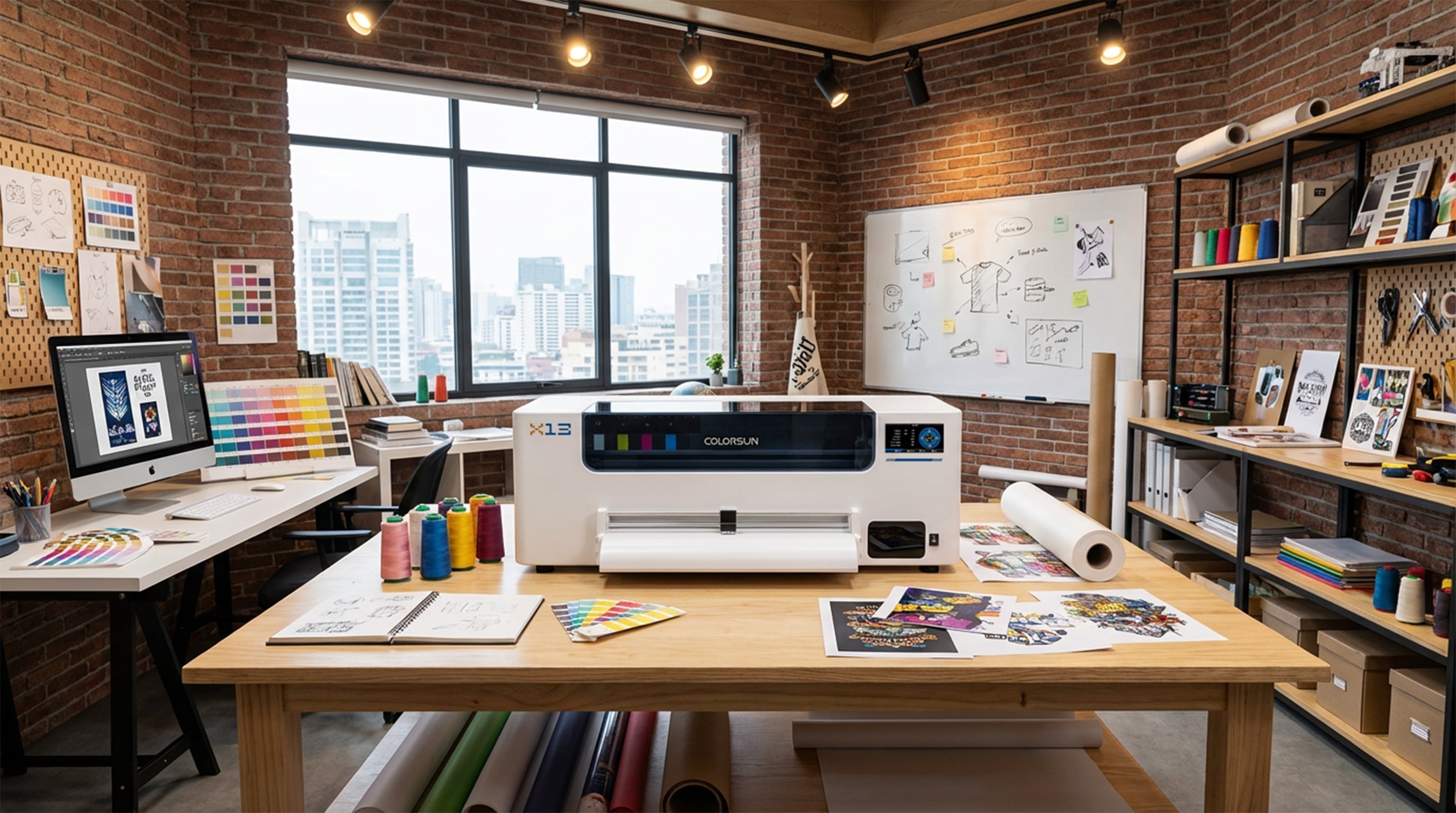
The Direct-to-Film (DTF) printing revolution continues to reshape the garment decoration industry. For entrepreneurs and print shops ready to invest, selecting the right DTF printer is the most critical decision that directly impacts business success. This guide breaks down the key factors to consider, moving beyond brand names to focus on the specifications, components, and support that truly matter.
Why DTF? Core Advantages for Your Business
DTF printing involves printing a design onto a PET film, applying a hot-melt powder, and then heat-pressing it onto fabric. Its meteoric rise since 2021 is due to compelling advantages over other methods:
-
Unmatched Versatility: It works on a vast array of fabrics—cotton, polyester, wool, nylon, lycra, denim, and silk—making it a true "all-purpose" textile printer.
-
Simplified Workflow: Unlike Direct-to-Garment (DTG) printing, it requires no garment pretreatment. Unlike screen printing, it needs no screens or films, drastically reducing setup time.
-
Durability & Quality: Offers excellent wash fastness (4-5 grade) and abrasion resistance. Designs are soft to the touch and highly durable.
-
Efficiency & Eco-Friendliness: Enables both short-run customization and bulk production with quick turnaround. The process generates minimal waste and no wastewater, making it a cleaner option.
7 Key Factors for Choosing Your DTF Printer
-
Analyze Your Market & Business Needs
Start by defining your demand. Ask: What is my order volume? Do I have seasonal peaks? Do I need to print extra-large formats or on difficult materials? Match your answers to printer types:-
Desktop A3/A4 Printers: Ideal for small-batch, high-quality printing (e.g., custom T-shirts).
-
Large-Format, High-Performance Printers: Suited for bulk production and special finishes.
-
Industrial Multi-Head Printers (1.2m, 1.8m width): Designed for continuous, high-speed output in factory settings.
-
-
Understand the Core Components
The "guts" of the printer determine performance, quality, and longevity. Look beyond the housing.-
Print Head: The heart of the machine. Epson heads are industry standard. The I3200-A1 model is generally recognized for higher performance and longer lifespan compared to entry-level options like the XP600.
-
Mainboard: This coordinates all printing components. Reputable brands include Hansung, Senyang, or proprietary boards from experienced manufacturers.
-
White Ink Circulation System: Crucial for preventing pigment settling. High-quality machines use reliable components like Japanese 3M filters in their circulation systems.
-
-
Select High-Quality DTF Ink
Ink quality directly affects operational smoothness and print results. Premium DTF ink should:-
Resist Clogging: Remain stable for over 24 hours at room temperature.
-
Offer High Coverage: Print 10-20% more area than standard inks, reducing cost.
-
Deliver Excellent Color Gamut & Accuracy: Produce vibrant, true-to-life colors.
-
Yield Sharp Edges: Essential for clean powder shaking and no "glue lines."
-
Feel Soft: Result in flexible prints with high wash fastness.
-
-
Choose the Right Hot-Melt Powder
Powder affects the hand feel and durability of the final transfer. High-purity TPU powder is highly recommended because it:-
Is free of impurities, leading to cleaner shaking.
-
Provides excellent stretch resistance and scratch resistance.
-
Produces sharp details (no ghosting on fine text) and is anti-yellowing.
-
-
Source Reliable PET Film
The transfer film must have:-
An even coating with strong ink absorption.
-
Accurate alignment and anti-slip properties.
-
Excellent release after powder application.
-
A soft, elastic finish that is wash-resistant and crack-free.
-
-
Evaluate Price Wisely
DTF printer prices vary widely. The cheapest option is rarely the most cost-effective. Consider visiting the factory to assess production standards and operational rigor. A slightly higher upfront investment in a reliable machine from a transparent manufacturer saves money on downtime and repairs later. -
Prioritize Training and After-Sales Support
Comprehensive support is non-negotiable. Before purchasing, confirm:-
Shipping and Import: Does the supplier offer door-to-door service or agent support?
-
Warranty: What is covered and for how long?
-
Technical Support: Is on-site or remote troubleshooting available?
-
Training & Resources: Look for suppliers that provide detailed manuals, instructional videos, and troubleshooting guides—a sign of long-term reliability.
-
Conclusion
Choosing a DTF printer is a strategic investment. By thoroughly assessing your business needs, understanding the critical components and consumables, and partnering with a supplier known for quality and strong support, you can secure a DTF solution that drives growth, quality, and profitability for years to come.
FAQs: Choosing a DTF Printer
Q1: I'm just starting a small custom print shop. What type of DTF printer should I get?
A: For a startup focusing on custom T-shirts and small batches, a desktop A3 or A4 format DTF printer is likely the best fit. It offers high-quality output, a lower initial investment, and is manageable for learning the process before scaling up.
Q2: The print head is mentioned as critical. What's the real difference between an Epson I3200-A1 and other models?
A: The Epson I3200-A1 print head is engineered for higher durability and consistent performance in industrial environments. It generally offers longer lifespan, greater precision for fine details, and better reliability under high-volume use compared to entry-level heads, reducing long-term maintenance costs and downtime.
Q3: How important are the consumables (ink, powder, film) compared to the printer itself?
A: Extremely important. They are the "fuel" for your printer. Using low-quality or incompatible consumables can damage your printer (especially the print head), produce poor-quality transfers, and increase failure rates. Investing in high-quality, recommended consumables protects your machine and ensures professional, durable results for your customers.
Q4: Many suppliers promise good support. What should I specifically ask about?
A: Move beyond general promises. Ask for specifics: "What is included in the on-site training?" "What is the response time for technical support?" "Can you provide the warranty document for review?" "Do you have a library of troubleshooting videos I can access?" Suppliers with transparent, detailed answers are typically more reliable.
Q5: Is it necessary to buy a printer from a very well-known international brand?
A: Not necessarily. While established brands have a reputation, some innovative newer manufacturers offer robust machines, often with better value, more flexible configurations, and features tailored to specific market needs. The key is thorough research: request customer references, seek independent reviews, and if possible, visit their facility to evaluate their build quality and expertise directly.